#ai & tech#made-this-up
What a Rubik's Cube and Car Wax Have to Do With My Keyboard Setup
A 12-year-old TVS Gold. One weekend. Two things that have no business being in a keyboard teardown.
I have a Rubik’s cube in my desk drawer and a bottle of ceramic car wax under my sink. Neither of these things should have anything to do with keyboards.
And yet, that’s exactly what brought a 12-year-old TVS Gold back from the dead.
The Keychron K8 — modern, wireless, objectively the better keyboard on paper — has been a very expensive dust collector for three months. I don’t miss it.
I found the TVS Gold while shifting homes. It was buried in a box I hadn’t opened in years, the kind of box that’s secretly a graveyard of past-self decisions. I almost threw it out. But I pressed one of the keys and it made a sound that the Keychron, with all its modernity and its RGB lighting, has never made.
So it went in the keep pile.
Opening it up was the wrong decision and also the only possible decision. A decade of neglect had turned the inside into something I’d rather not describe in detail — dust, grime, and textures that shouldn’t exist. I cleaned it out with a brush and compressed air, and then I plugged it in to check if anything was worth saving.
Nothing happened.
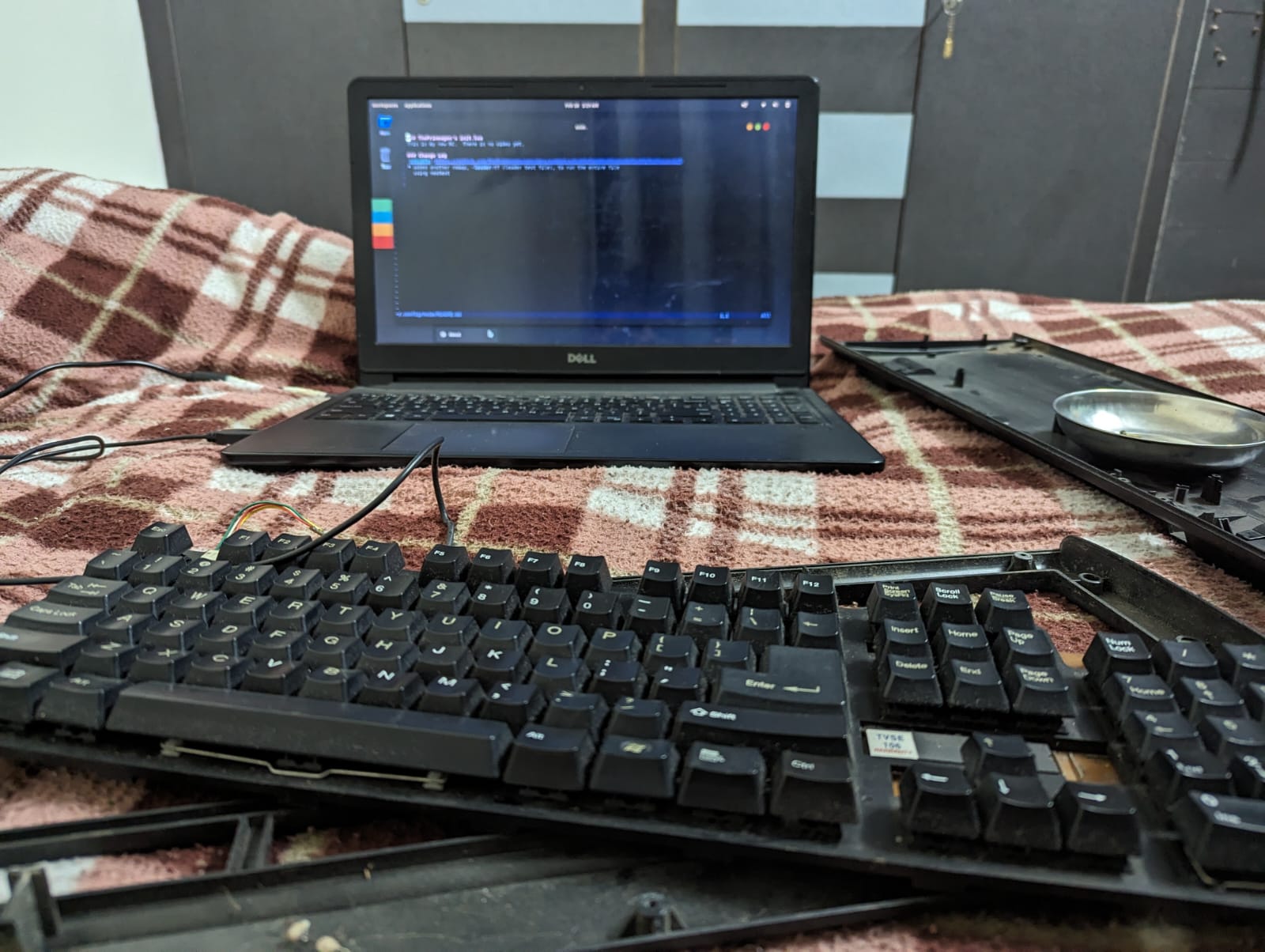
I was ready to call it. Then I looked more carefully at the connector pins — green with corrosion. A bit of IPA, some rewiring that I’d charitably call creative, a prayer to no god in particular, and I plugged it in again.
Every key worked. The thing was just waiting.
The guts being alive meant facing the exterior, which was a problem. The plastic frame had gone from black to a mottled grey-brown — not from dust, but from the plastic itself degrading.
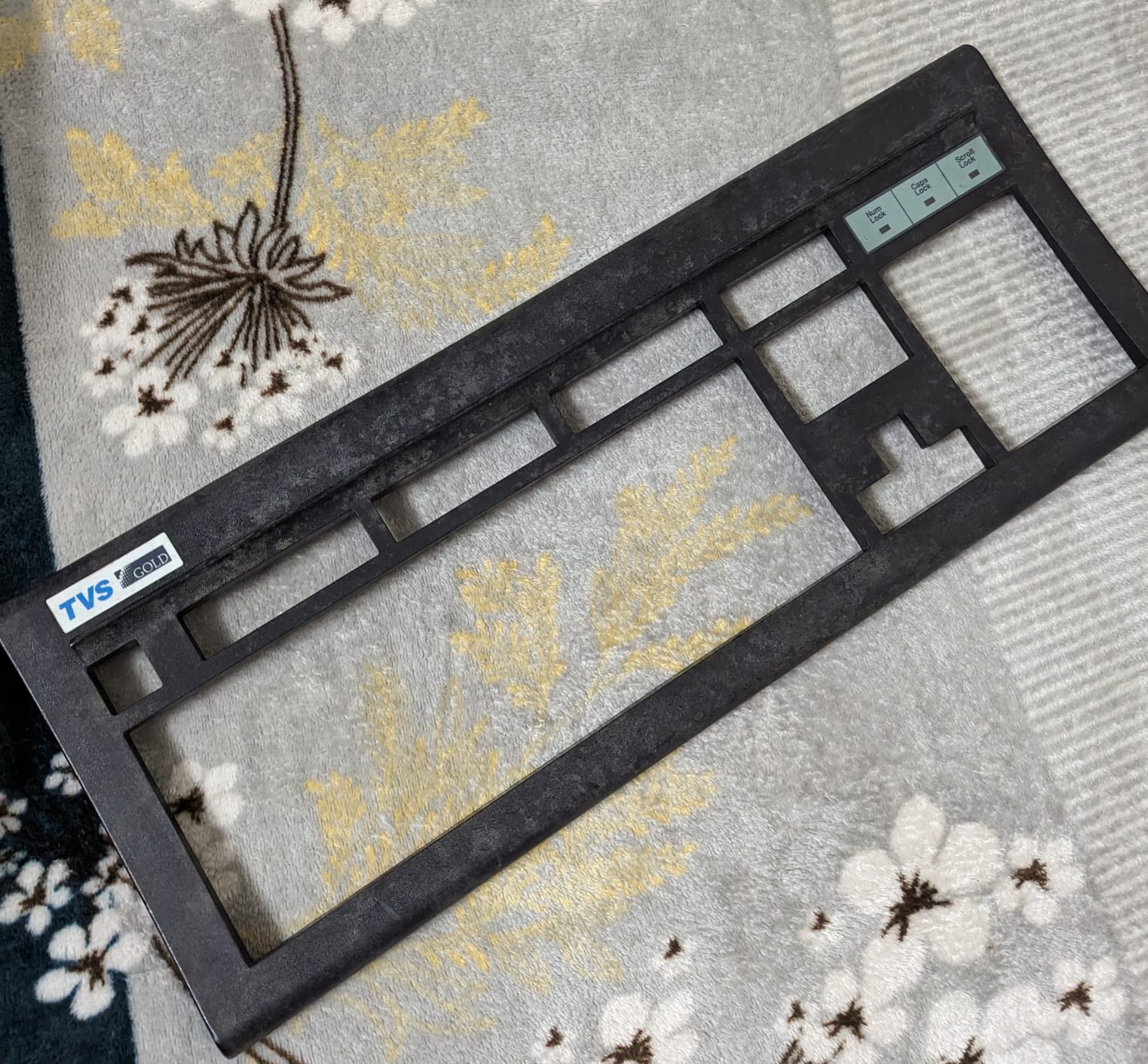
I dismantled the whole thing. The board cleaned up easily enough.
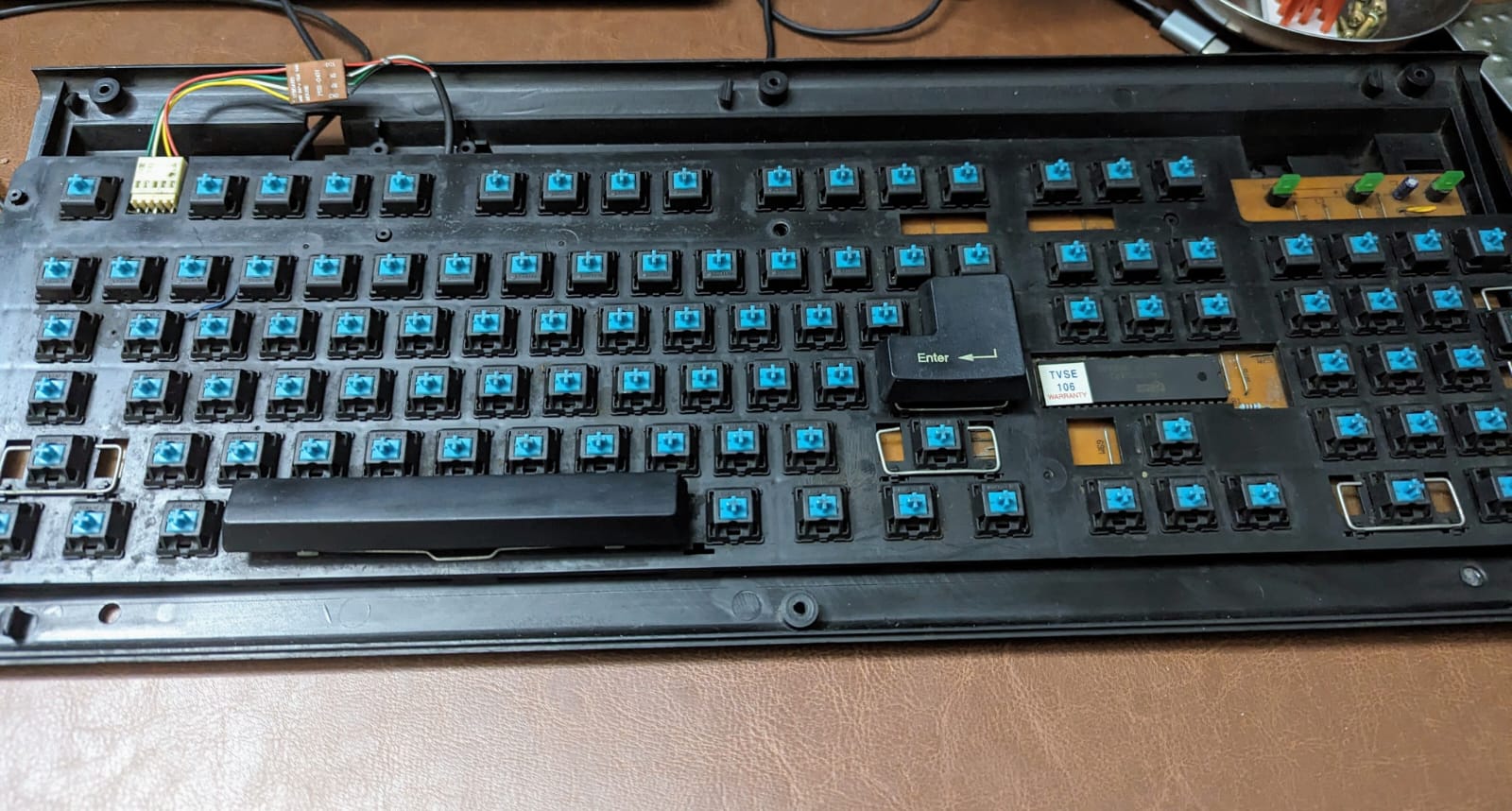
The keycaps did not. I scrubbed every single one by hand. All 104 of them. I was crouched over my sink for longer than I want to admit, and somewhere around keycap 70 I had a very clear thought: I could just buy a new keyboard. I kept going anyway.
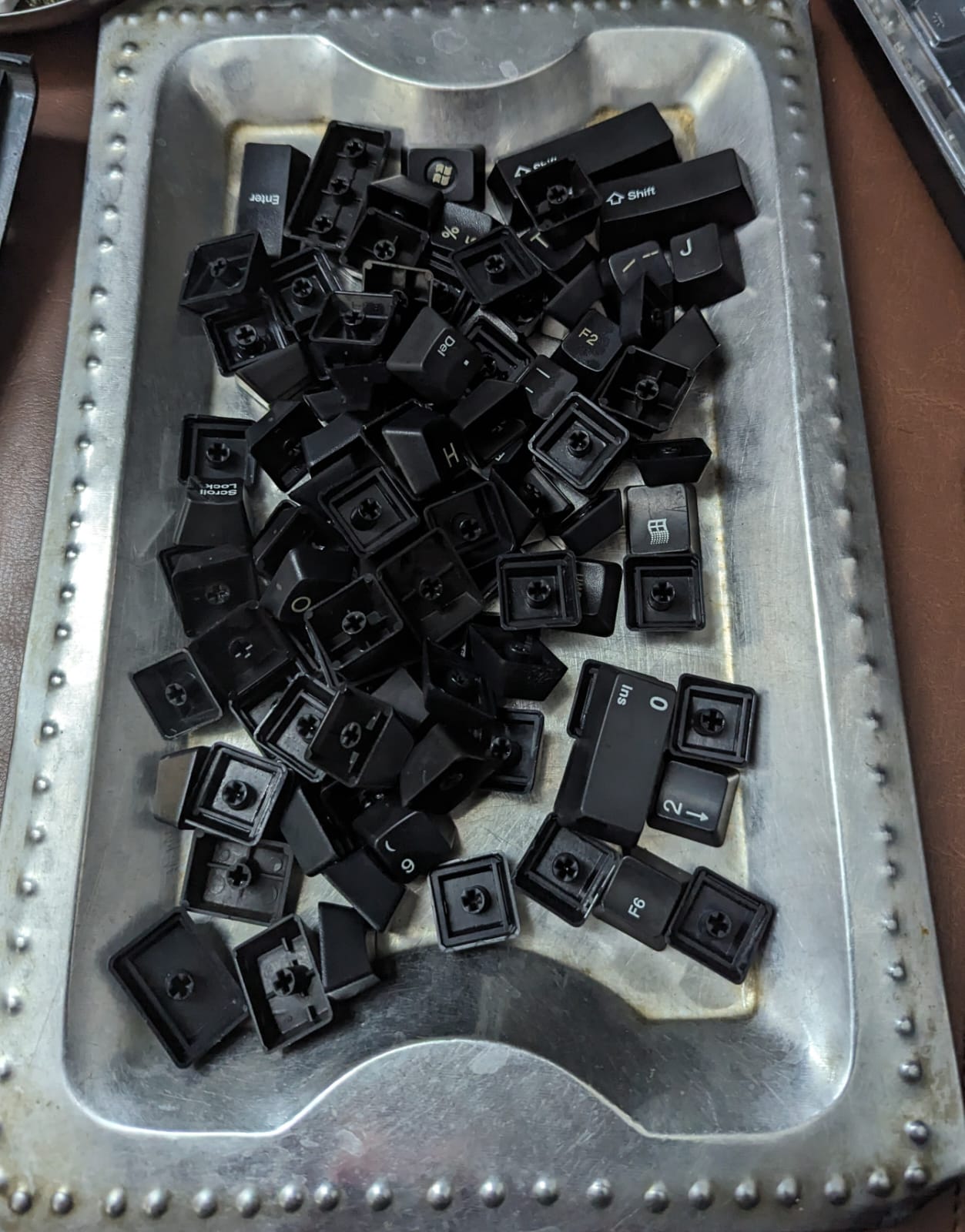
Clean keys, functional board — but the switches felt wrong. Stiff, scratchy, the kind of tactile experience that makes you not want to type. They needed lubing.
On a new board, I’d desolder each switch and do it properly. This was a 12-year-old board I’d just barely coaxed back to life, and my soldering is, generously, a work in progress. I was not about to risk it.
So I did something I’m not entirely proud of: I grabbed a syringe and reached for the silicone lube I use on my Rubik’s cubes.
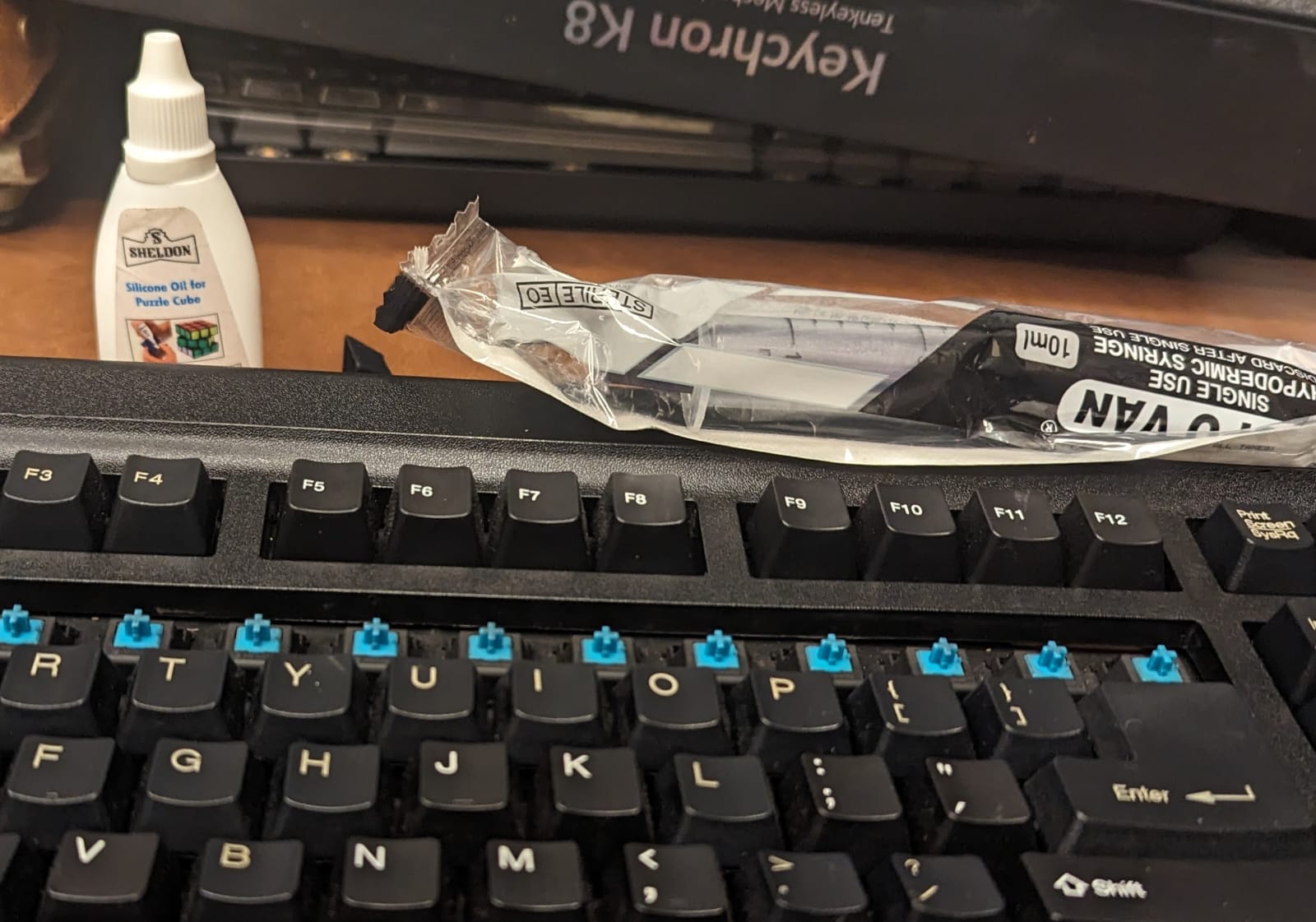
This is, apparently, a sin in keyboard circles. I found this out after the fact, which was good, because by then the keys were buttery smooth and I didn’t care. The lube that keeps a cube spinning through fingertips at speed turns out to be exactly what these switches wanted.
The keys were fixed. The frame was still an eyesore — clean, but faded and sad, the plastic dull in the way old plastic gets when it’s given up on being black.
I’d tried the conventional suggestions and wasn’t excited about any of them. Then I thought about the ceramic wax I use on my car. It’s designed to fill microscopic scratches and bond to clear coat, but the base mechanism is just restoring surface integrity.
Worth trying.
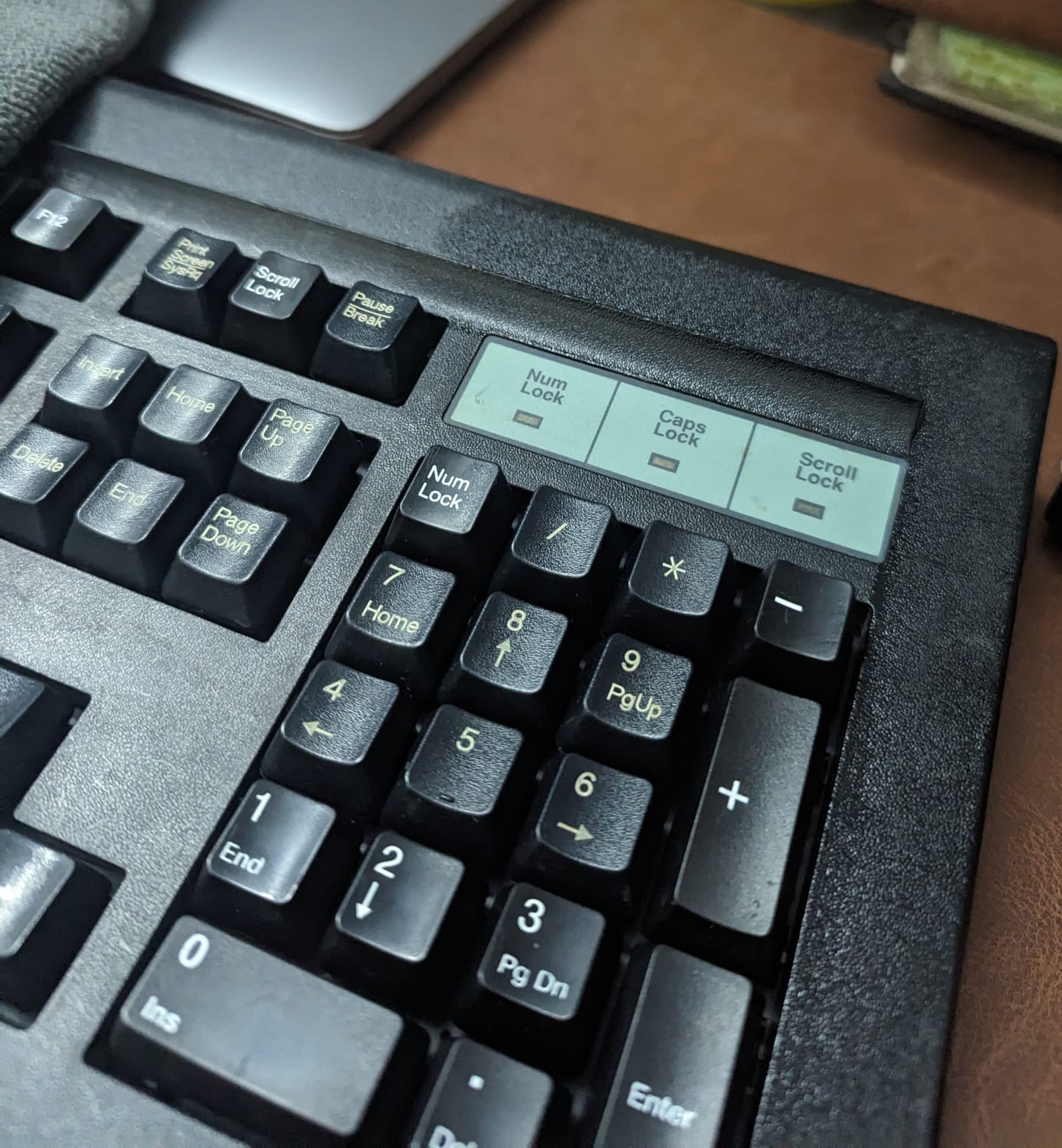
The result was genuinely surprising. Not just shinier — the actual black came back. Deep, even, close to what it must have looked like new.
So that’s what a Rubik’s cube and a car have to do with keyboards.
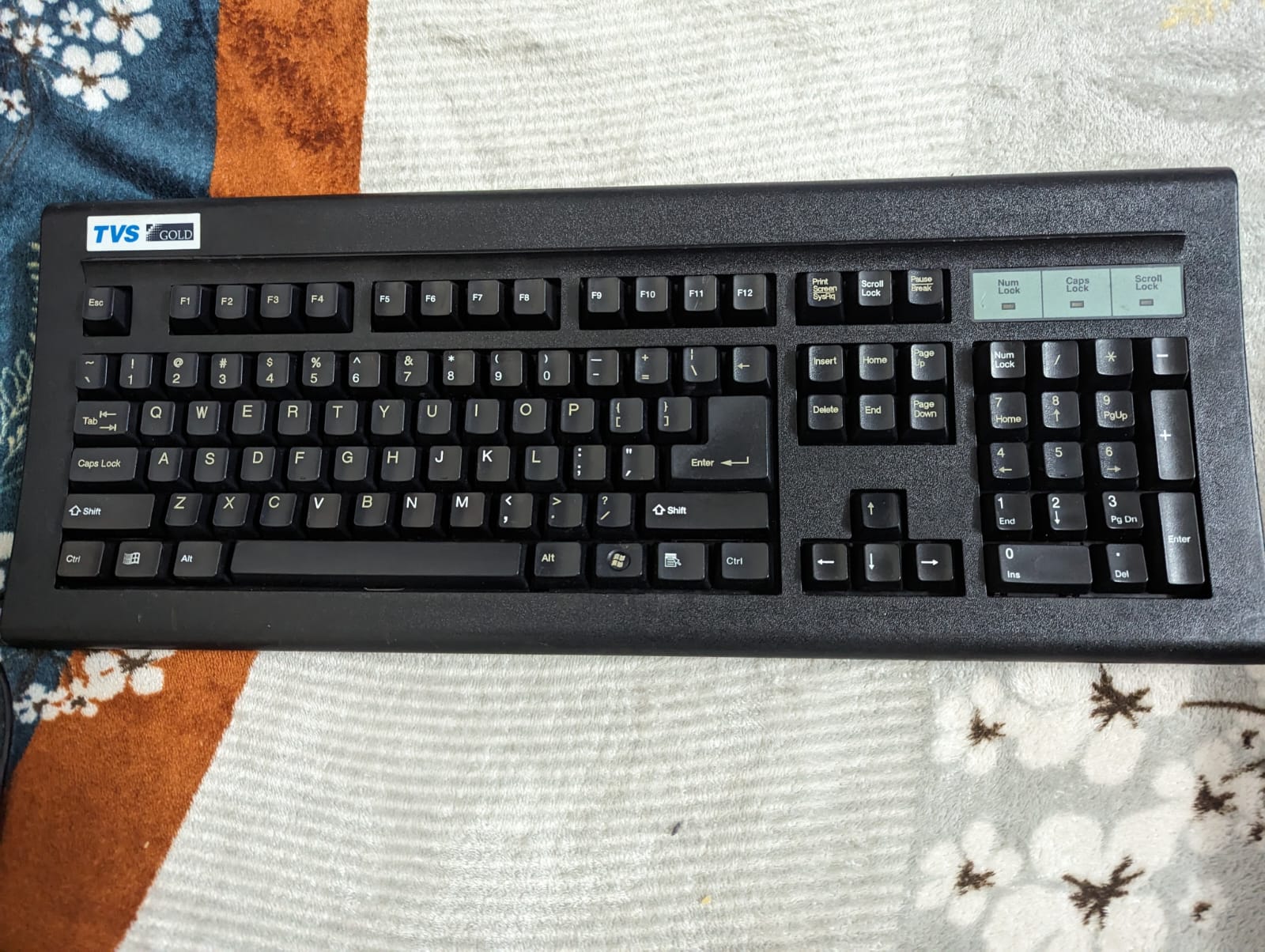
The TVS Gold has been my daily driver for three months. It gets more comments than anything else on my desk. And the original blue switches — the ones that made that sound when I found it in the box — they’re still doing exactly that.
TVS used to build switches like this. Their current lineup doesn’t come close. I don’t know if that’s a manufacturing decision or a cost decision or just time passing, but I’m glad this one survived long enough for me to find it in a box I almost threw away.