#nomading#note-to-self
Spiti: Five Days, One Mountain, One Arm-Wrestle I'm Still Losing.
Mountains, monasteries, pushups at 15,000ft and the one fight I never had a chance at winning.
It rained the morning we left Spiti.
Six days of hard blue skies, the kind that make you squint at your own photos later, and the valley picked our last day to rain. We stood next to our bus, bags fully loaded, nobody moving towards the door. Just standing there, feeling the drizzle, like the rain was saying something and it would be rude to leave mid-sentence.
Mountains don’t wave goodbye. They just rain.
But let me go back.
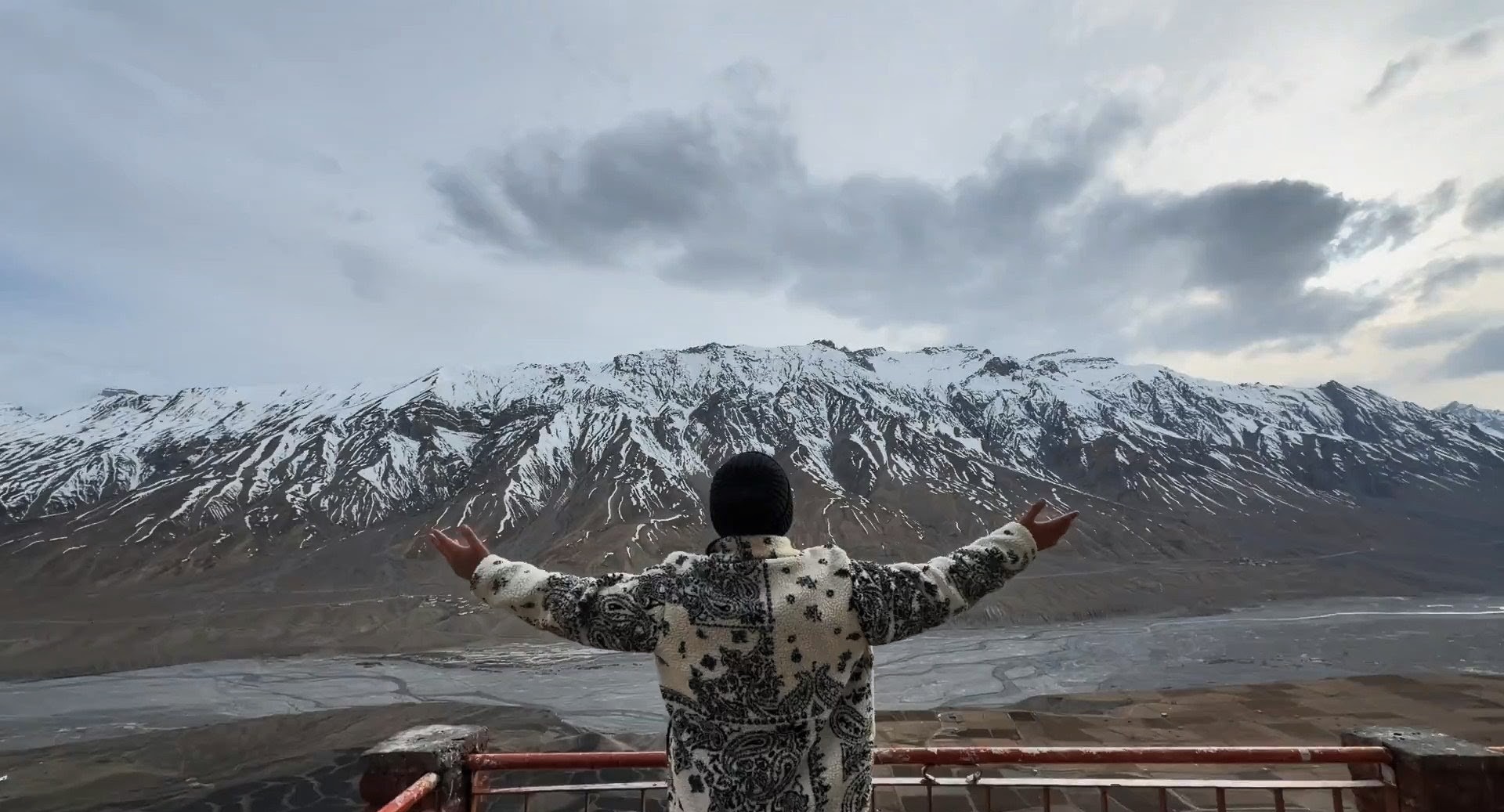
Day One: The Point Where Maps Become Decorative
The road from Shimla into Kinnaur is carved into the side of a cliff. Not metaphorically. Someone took a drill to a rock face several hundred meters above the Sutlej and decided that was a road now, and for sixty years everyone has agreed to believe him.
Our driver, a man of monk-grade calm, took these roads the way I drink coffee. Automatic. Present. Unbothered.
The rest of us had a more complicated relationship with the route. I won’t say we were scared. I’ll say we developed a sudden, collective interest in the view from the left side of the car specifically, and that someone turned on WhatsApp live location for a family group chat. I don’t know what we thought Gurgaon was going to do about a cliff in Kinnaur. It just felt important that they watch.
At one point the side mirror cleared the rock face by a margin we engineers call “acceptable”, but more commonly “bhaiya, itni side se mat lo!”
By Kalpa I had made peace with the roads. Convenient, because Spiti had five more days of them.
Kalpa: The Flags Pray Without You
Kalpa is where the trip stopped being a road trip and started being whatever it ended up becoming.
The prayer flags here don’t flutter, they spiral. Wind comes up the valley and the flags move like the landscape choreographed them. Each one is a prayer released into the air. I stood there trying to compute how many prayers had passed through that exact patch of sky over a few centuries, and concluded the math was not the point.
Kinnaur Kailash sat across the valley the whole evening, lit up like it knew. My camera captured it. My brain accused the camera of editing. The camera was innocent. The place just looks like that.
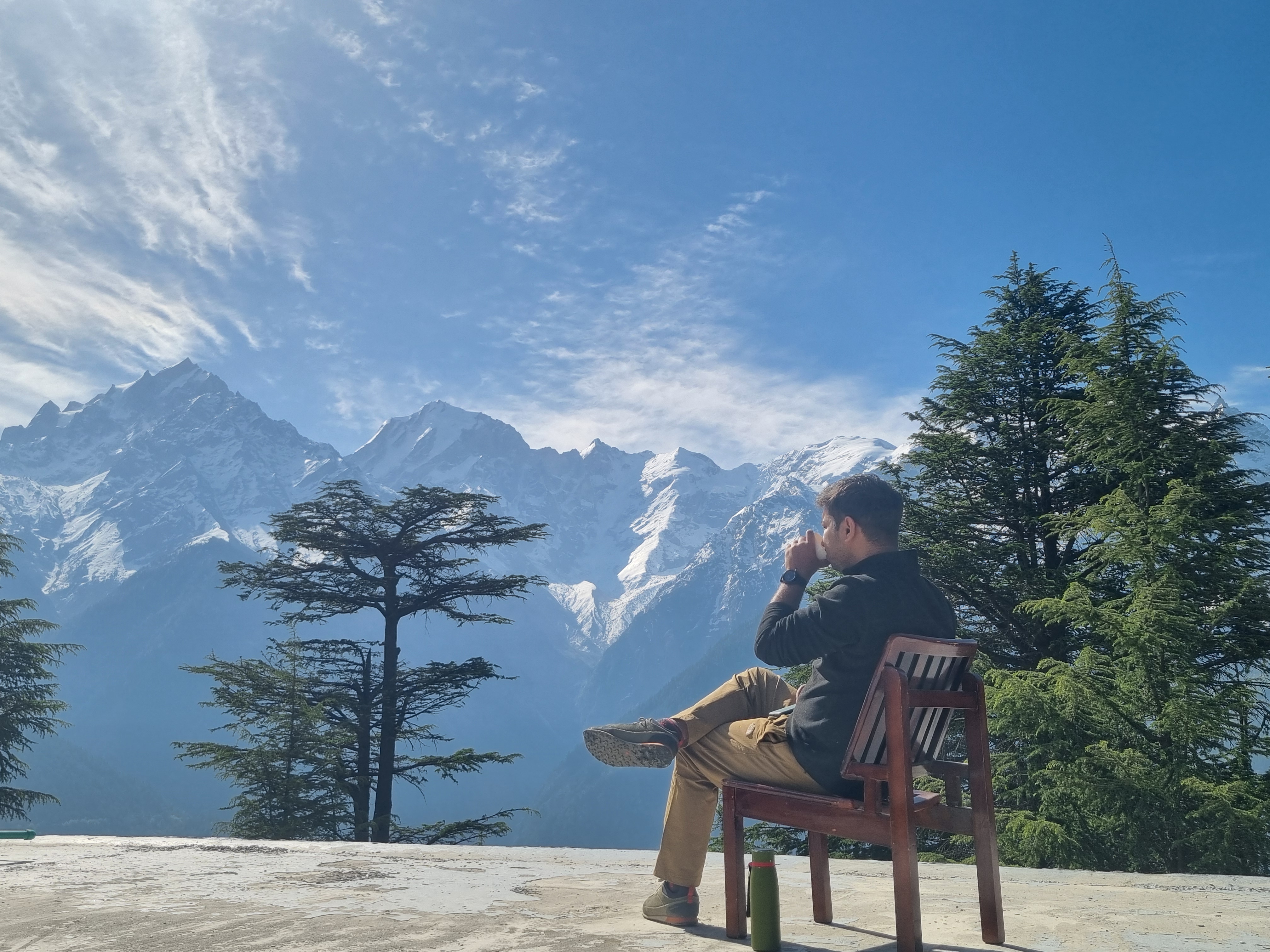
Tabo: Nobody Tells You About the Sky. That’s On Purpose.
The caves above Tabo are a twenty-minute trek from the village, up a trail that is marked the way secrets are marked, which is to say not at all. Monks used them for meditation for a thousand years. I climbed up at night with a lot of optimism in my phone’s camera capabilities.
Here’s what happened: I set up a twenty-minute timelapse of the sky, sat down on the cold ground, looked up, and didn’t say a word until the camera was done. Neither did anyone else. The starry night over Tabo isn’t a sight, it’s a ceiling. You think you’re prepared because you’ve seen photos and you consider yourself a person who appreciates a sky. You’re not prepared. It hangs there with absolutely no regard for what it’s doing to you. No camera can ever do justice to that!
The monastery below has murals over a thousand years old. The sky above has a few billion years on that. Both were watching us. Only one of us blinked.
Kaza: Four Seconds
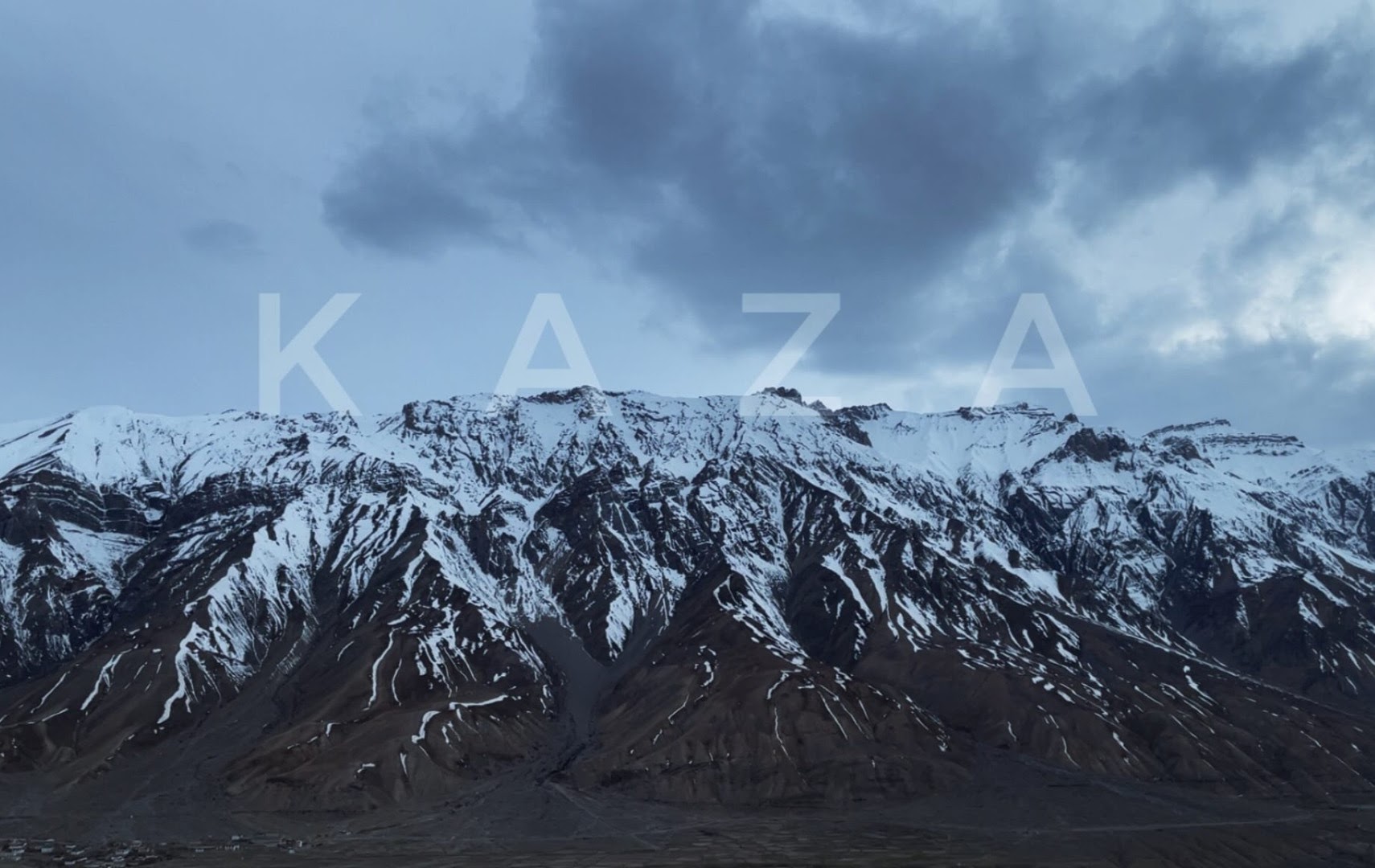
I should be honest about what I thought I was doing in Spiti.
I thought I was the guy who does pushups at what the signboard insists is the highest motorable road in the world. Who jumps in slow motion at the highest café in the world. Who shows up at 4,500 meters and meets the altitude on his own terms. And to be fair, all of that happened.
The pushups happened at the top of the pass, in air thin enough that my lungs filed a formal complaint by rep six. I finished the set anyway. There’s something about effort at that altitude that strips the pose out of it. You’re not performing, your body is too busy negotiating with the oxygen for you to perform. It’s just you, the ground, and mountains watching with complete indifference.
The slo-mo jump at the highest café in the world was filmed, reviewed, and refilmed, and looked significantly more cinematic in my head than on camera. Gravity at 15,000 feet works exactly like gravity at sea level. I have no idea why I expected a discount!
Then, at our homestay in Kaza, the owner’s daughter who could not have been more than seven, challenged me to arm wrestling.
She had the energy of someone who had done this before. I realized mid-lock that she absolutely had, that I was not her first tourist challenger, and that the outcome had been decided before I sat down. Four seconds. No trash talk, no celebration. She went back to her food the way you move on from something that was never really a question, while I sat there recalibrating my entire understanding of the week.
Five days of altitude couldn’t humble me, because I was too busy doing pushups at it.
A seven year old needed four seconds.
Komic: The Sacred Absurd
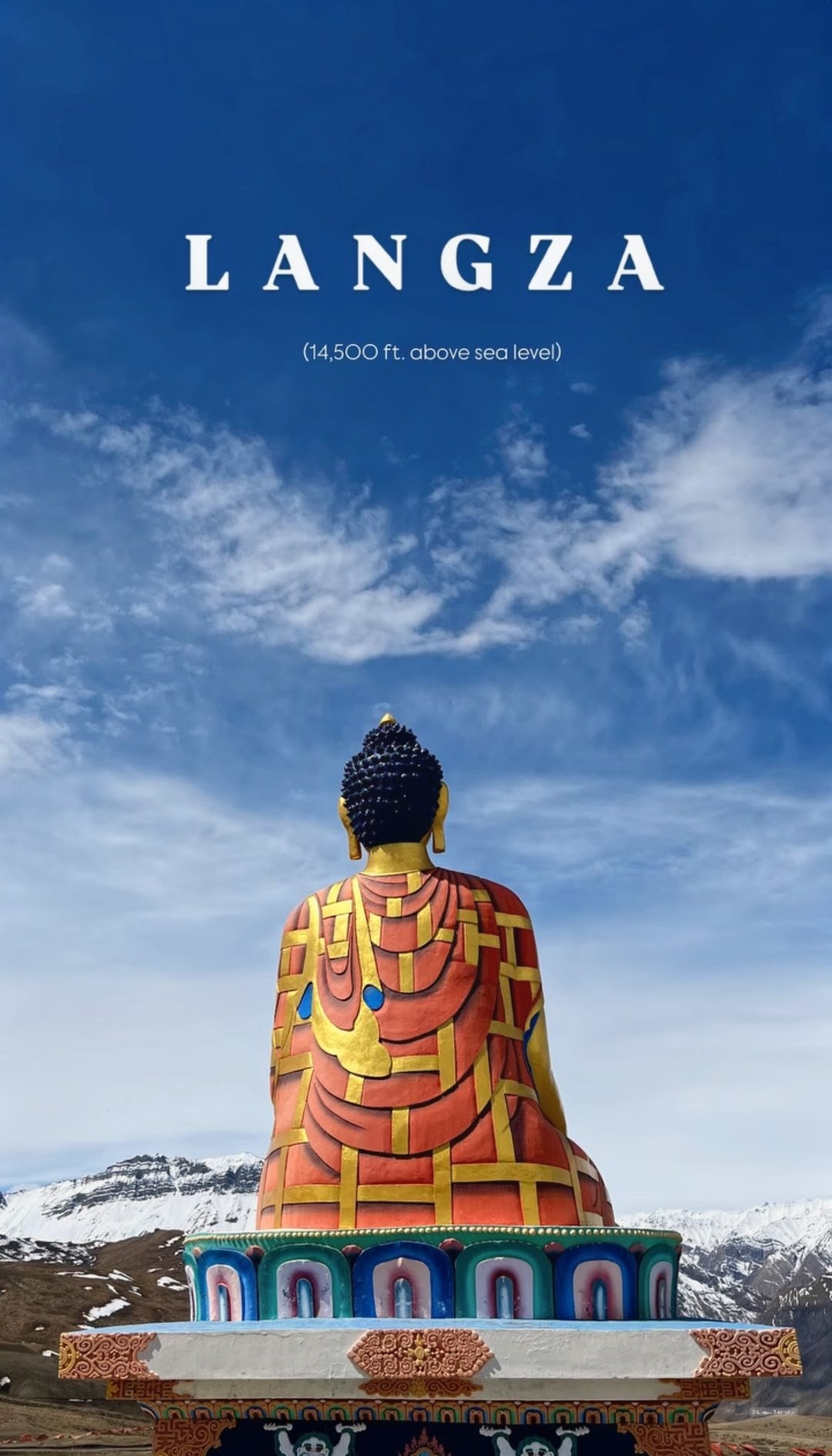
Komic claims the title of highest village in Asia connected by motorable road, sits at more than 15,000 feet, and contains one monastery, a handful of houses, and on the day we visited, six adults doing Chaiya Chaiya in front of the Buddha statue a few hundred metres from the top.
I can’t fully reconstruct how it started. Someone hummed. The hum found a second voice. And then it wasn’t humming anymore, it was the full routine, train-roof energy, shoulders and all, in front of highest buddha statue in the world.
Buddha didn’t object. I choose to believe he was deep in meditation. I also believe, with equal conviction, that he has seen worse.
There’s a version of this story where it reads as disrespect. I don’t think it was. I think when a place overwhelms you past a certain point, you respond with the most instinctive joy you own. Ours happened to be a 90s Shah Rukh number. The Buddha kept smiling. Statues do that, but still.
Kalpa Again: 27 at 9,000 Feet
Coming back through a place you’ve already seen has a different texture. Kalpa on the way in was a view. Kalpa on the way back was a verdict, the same valley asking what you did with the last five days.
The cake came out as soon as the clock hit 12.
The cake came out because someone in the room had decided the clock wouldn’t hit twelve without it. She’d found the one bakery on the way to Kalpa that half exists, convinced it to fully exist for a day, and made sure I spent the first minute of twenty-seven laughing instead of just being tired. The cake tasted like that effort — incredible, and a little structurally unsound.
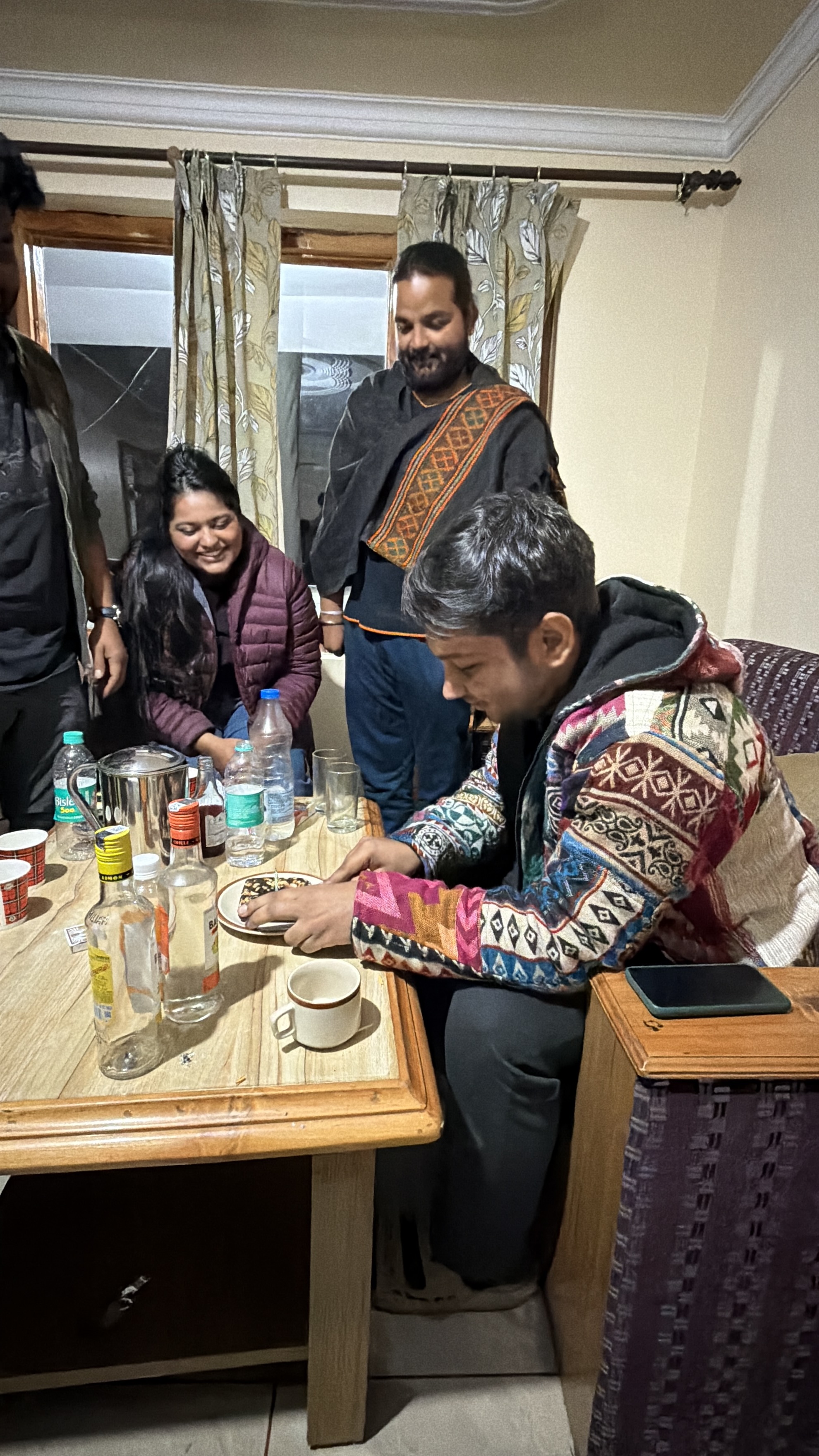
The bonfire that night turned everything orange. Cold came down from the valley, the fire pushed back, and we sat inside that negotiation for hours. Around midnight I caught myself thinking: I don’t want more Spiti, exactly. I want more of this. The thing where you’re somewhere you chose, with people you chose, and there is nowhere else you’re supposed to be.
Chitkul: The River Knows
Chitkul is the last village before the Indo-Tibetan border. Past it you need permits, and past those you need a different passport. The Baspa river runs through it carrying glacier melt that is the exact colour of somewhere you haven’t been.
I did pushups on the bank. Mid-rep, my face passed close enough to the water that an opportunity presented itself, and I have very little self-control near rivers. So I dipped my face in. Snowmelt cold is not regular cold. Regular cold is a tap on the shoulder. This was a slap with paperwork. I came up instantly, reconsidered my life, and went back down for another.
Later I found a flat rock by the water and lay down on it, intending to rest for a moment. The river was exactly the right sound and the rock was exactly the right temperature, and then it was twenty minutes later and someone was taking photos of me for evidence.
The Last Sunset, and Then the Rain
The sunset on the last evening was too good. I mean that as an accusation. It felt like the mountains had checked the calendar, seen we were leaving in the morning, and decided to run up the score. The sky went through its colours in the wrong order. The valley filled with light at angles that don’t survive geometry. We took photos knowing the photos would fail, because you have to try anyway.
And in the morning, it rained.
Not a storm. Nothing dramatic. Just steady, considered drizzle, falling on roads we were about to drive out on, after five days of skies so clear they felt personal.
So there we were. Bags half-loaded. Nobody moving towards the bus.
I still don’t know if it was the valley saying goodbye or saying you left something here. I’ve turned it over a few times since. Both feel true, and neither explains why none of us could get in the bus.
We drove out of Spiti in the rain. I kept looking back, at the flags, at the roads, at all the ego I’d left at altitude, at a homestay in Kaza where a seven-year-old owns four seconds of my life. We didn’t talk much on the drive down. Not because we were tired.
Some things you don’t want to name yet.
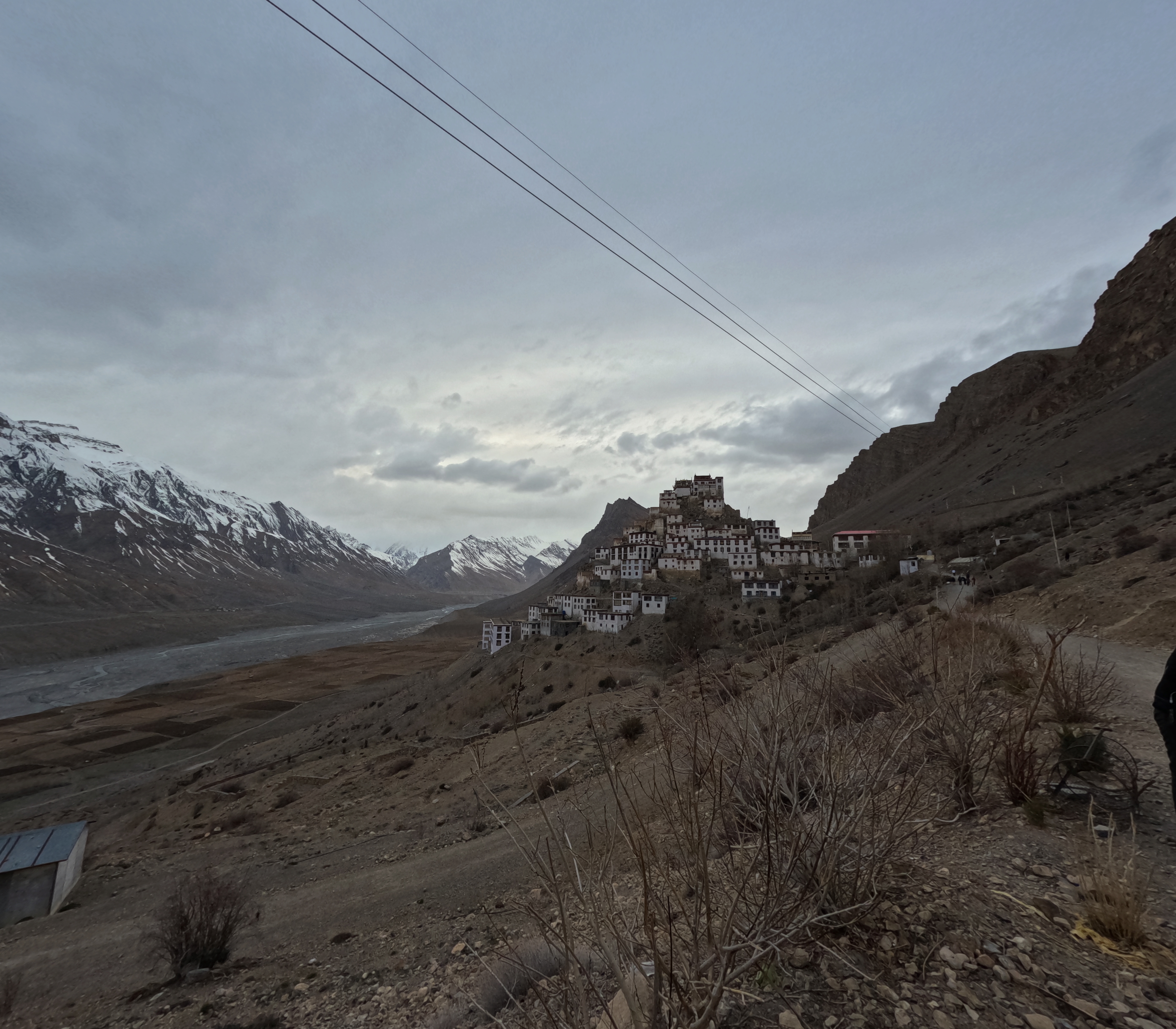 Spiti doesn’t let you leave with all your edges intact. That’s probably the point.